MIST
Magnetosphere, Ionosphere and Solar-Terrestrial
Latest articles
- Introducing XIM to Study the Spectral Properties of Solar Wind Charge Exchange at Earth’s Magnetospheric Boundaries
- Saturn's Auroral Dusk Sector Magnetosphere-Ionosphere Coupling During Cassini's Proximal Orbits
- A Multi-Event Comparison of dB/dt Resulting From Omega Band Aurora
- Can we Resolve Magnetosheath Jets with a Soft X-ray Imager?
- Russell-McPherron mechanism effect on space junk de-orbiting
Latest news
2026 MIST Council Election Results
It is our pleasure to announce the results of the latest MIST Council Election.
- Samuel Wharton (University of Leicester) is elected for a 3 year term as a MIST Councillor
- Jewel Abbey Relampagos (Lancaster University) is elected for a 1 year term as the MIST Student Representative
In addition, due to concerns from the community regarding the ongoing UKRI/STFC funding situation, MIST Council have also decided to charter Mark Lester (University of Leicester) as an additional councillor to inform and steer the council in matters related to this specific brief, as set out in Article 4.5 of the MIST Charter.
We would like to congratulate everyone on their new roles. The full composition of Council can be found on the MIST website (https://www.mist.ac.uk/community/mist-council). We would like to thank all the candidates for putting themselves forward and everyone who took part in the voting. We received votes from 132 people which represents a turnout of 21.5% of people registered to receive the MIST emailing list.
Finally, MIST Council would like to extend their thanks and gratitude to our outgoing members: Fiona Ball and Georgios Nicolaou. We would also like to say a special thank you to Andy Smith who was co-opted to be on MIST council while Rosie Johnson was on maternity leave, thank you for all of your hard work.
Open Letter Ready For Signatories
Protect MIST Science! Sign the MIST Community Open Letter on the STFC funding cuts!
https://sites.google.com/view/uk-mist-community-open-letter
Statement from MIST Council regarding the STFC Funding Situation
Statement from MIST Council regarding the STFC Funding Situation
MIST Council is deeply concerned by the ongoing STFC funding uncertainty and its impact on our community and beyond.
The current combination of prospective delayed and reduced funding, together with already volatile financial situations at universities across the UK, is placing significant strain on research groups. In some cases, institutions may be unable to support researchers through gaps between projects, increasing precarity across the community and adding significant pressure on early-career researchers.
We are concerned that continued uncertainty risks accelerating a brain drain from the UK, as skilled researchers reconsider their future in a system offering limited stability. The loss of expertise at any career stage would have lasting consequences for UK space science.
What is going on?
For those that are unaware of the situation, it is complex and evolving. We suggest the following sources to get up to speed on the current developments.
https://ras.ac.uk/news-and-press/news/proposed-budget-cuts-catastrophe-uk-astronomy
What are we doing about it?
Behind the scenes, MIST Council is actively engaging with relevant parties to understand the scale of the challenge and to identify constructive ways forward.
- We are seeking seasoned members of the community to join MIST Council on a task force to help develop options and represent the needs of our community. If you would like to be involved, please reach out to us via the MIST Council email (This email address is being protected from spambots. You need JavaScript enabled to view it.) by the end of this week (13th February 2026).
- In addition to the task force, we want to provide an open forum for discussion and collective input among all members of the wider MIST community. We are exploring options and will be in touch as soon as possible with further details.
- We believe in working together in the face of the current challenges and we are collaborating with UKSP and others to strive for a fair and positive outcome for all. We are reaching out to members of the SSAP (Solar System Advisory Panel) to explore the hosting of a community town hall meeting, like the one already being organised by the AAP (Astronomy Advisory Panel), to provide an open forum for discussion and collective input.
What can you do to help?
There are several open letters representing people in various career stages that have been made available to sign. We encourage you to read the relevant letter(s) and to sign them if you support them:
- Fellowship Holders: https://advancedfellows-openletter-stfc.github.io/index.html
- Early Career Researchers: https://ecr-openletter-stfc.github.io/
The Royal Astronomical Society are also urging Fellows to lobby their MPs against the cuts, and have included a template letter that can be used to do so:
https://ras.ac.uk/news-and-press/news/ras-fellows-urged-lobby-against-unprecedented-cuts
MIST Council will continue to advocate for transparency, stability, and funding structures that recognise both the long-term nature of our science and the people who deliver it.
We thank you for your continued support in this period of uncertainty.
Please contact This email address is being protected from spambots. You need JavaScript enabled to view it. if you have further suggestions.
MIST Council

Announcement of New MIST Council 2025
We are very pleased to announce the following members of the community have been elected to MIST Council:
- Gemma Bower (University of Leicester), MIST Councillor
- Tom Elsden (University of St Andrews), MIST Councillor
- Cameron Patterson (Lancaster University), MIST Councillor
- Fiona Ball (University of Southampton), Student Representative
They will begin their terms in July 2025.
We thank outgoing MIST Council members: Maria Walach, Chiara Lazzeri and Emma Woodfield. Andy Smith will remain on council a little longer as a co-opted member to cover Rosie Johnson's maternity leave.
The current composition of Council can be found on our website (https://www.mist.ac.uk/community/mist-council).
Announcement of New MIST Councillors.
We are very pleased to announce the following members of the community have been elected unopposed to MIST Council:
- Rosie Johnson (Aberystwyth University), MIST Councillor
- Matthew Brown (University of Birmingham), MIST Councillor
- Chiara Lazzeri (MSSL, UCL), Student Representative
Rosie, Matthew, and Chiara will begin their terms in July. This will coincide with Jasmine Kaur Sandhu, Beatriz Sanchez-Cano, and Sophie Maguire outgoing as Councillors.
The current composition of Council can be found on our website, and this will be amended in July to reflect this announcement (https://www.mist.ac.uk/community/mist-council).
Q&A with MIST Employers
Applying for a post-doc? Find out what the employers are looking for, what not to do, and how to make your application stand out!
Meet The Employers!
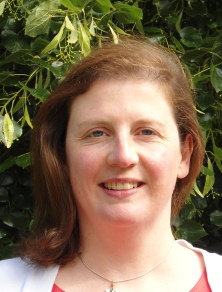
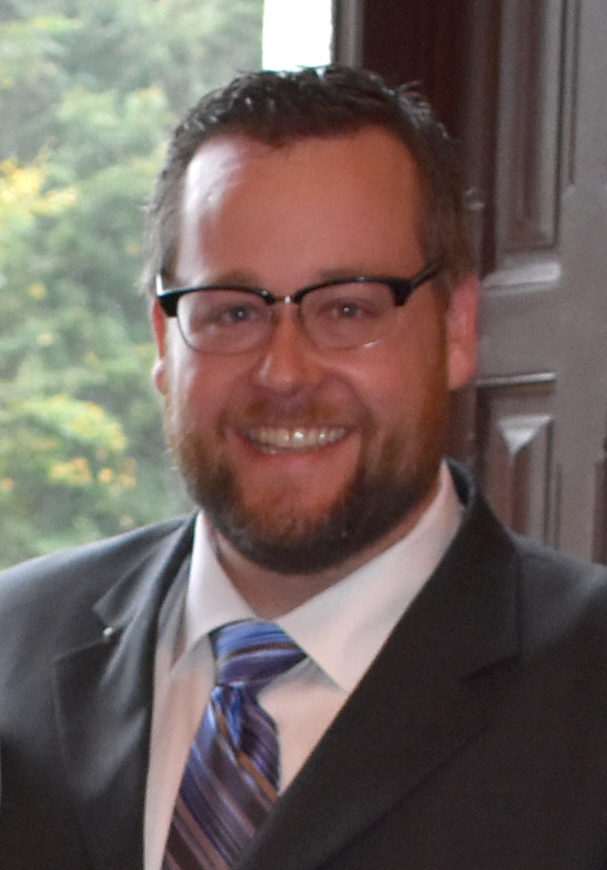
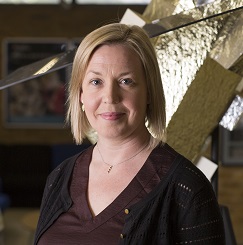
Clare Watt (left): Associate Professor at the University of Reading.
Clare’s research focuses on space weather effects in Earth’s radiation belts and understanding the physics of wave-particle interactions in collisionless plasmas. Prior to working at the University of Reading, Clare worked at the University of Alberta, Canada, and completed her PhD at the British Antarctic Survey.
Daniel Verscharen (middle): Senior Research Fellow at the Mullard Space Science Laboratory, University College London.
Daniel researches the kinetic plasma physics of the solar wind and the solar corona. Daniel has also worked at the University of New Hampshire, United States, and the University of Bonn, Germany.
Emma Bunce (right): Professor at the University of Leicester.
Emma’s research focuses on the magnetospheres and auroral processes of Saturn and Jupiter. Emma is the Principal Investigator of the MIXS instrument on Bepi-Columbo, Co-Investigator on the JUICE and Cassini teams, and a Juno Science Team member.
What are the key things that you look for in a candidate?
Clare:
With every postdoctoral job advert, there is a full job description and person specification as part of the advert, and these can vary depending on why I’m hiring. But, the recurring themes are “has, or expects to hold a PhD in a relevant discipline” (not necessarily the exact subject of the job description), “ability to program” (difficult to any work in my group without), “evidence of ability to communicate science to specialist and general audiences” (usually in form of papers, outreach, blogs etc), “evidence of ability to work independently” (some candidates forget that the successful completion of a PhD is good evidence of this!), “evidence of ability to work in a team” (I prefer when candidates highlight this specifically rather than leaving me to guess from their CV).
Daniel:
It is important that the post-doc candidates demonstrate that they have their own ideas and interests. Although post-docs are usually hired as part of a project with pre-defined research themes, it is important that the candidates can apply their solid physics knowledge to develop a solution strategy for new problems. Remember that most projects discover very interesting and unexpected research pathways as they progress, and so I would not look for someone who can only perform the step-by-step research tasks as directed by the PI.
Emma:
If someone is applying for a post-doctoral position it indicates to me that they are deciding (at least for now) that they are keen on an academic career in research. It is an opportunity for training, and as a post-doc supervisor I like to make sure that my people have as much opportunity to increase their skills and expertise in as many different areas as possible. So I am looking for someone who, as well as responding to the job specification, gives some insight as to what their aspirations are - it is not just about what the candidate currently has on their CV but what they feel would like to gain from being a post-doc and the potential for independence that they have.
How do I prepare for an interview?
Clare:
Read the person specification!!! Legally, this is what the panel will use to decide between candidates and we’re not allowed to use other things to make the decision.
Almost every panel I’ve been on has asked the candidate about their long-term career plans and how this job fits in. The right answer is NOT “I want to be an academic”, but an honest reflection on your own career plans and how the post fits in. The wrong answer is “I’ve just finished my PhD and I don’t know what else to do”.
Daniel:
In addition to reading the person specification, also read your own application documents again! You don’t want to be in a situation where you aren’t sure what exactly you had written about a certain point in your application (yes, that does happen!). A UK-specific peculiarity is this block of “standard questions” in job interviews (e.g., “what is your greatest weakness?, where do you see yourself in five years?”). There are plenty of websites with examples for these questions in UK academic job interviews. Read them and think about your answers!
Most interviews end with the question “do you have questions for us?” Be prepared with one or two questions about the place where you apply and your potential job. This shows interest and engagement.
Emma:
Definitely lots of preparation! If you are asked to give a presentation, spend some time on this aspect of the interview and make sure it is well rehearsed (as you may be nervous).
There are plenty of common interview questions out there which you can find online, but do resist giving the standard answers! I like to ask slightly different questions for this reason, but usually the responses fall into the main categories of questioning - why you, why here, why do we care about this research, where do you want to be in the future? And for your personal research - what are you most proud of, what aspect of your work has had the most impact. So your prepared answers to stock questions should be adjustable as you go along in the interview.
What do you expect from a postdoc compared to a PhD student in terms of their job responsibilities?
Emma:
I hope that a post-doc will be growing in independence, and keen to do so. I also hope that a post-doc will be a good team player and helping the group around them. Day-to-day help with PhD students can be valuable experience and will increase your publications and possibly research topic experience, but be careful not to be distracted from your own research goals. I would like to see a post-doc looking for training opportunities, and I am keen to support them in endeavours beyond the immediate research that they are passionate about - for example science communication, volunteering, participating in discussion groups/committees etc. In an ideal world you are well organised and are able to plan and manage your time and tasks well. This is something we are all striving for!
Clare:
More independence and responsibility. The research part doesn’t really change much, but you’re much more responsible for how you spend your time. There are many more possibilities for doing diverse things - profile-raising activities at conferences and on committees, much more reviewing, outreach possibilities. I loved being a post-doc because there was a lot of freedom, but I had a huge amount of responsibility to ensure that the work progressed. Most academics will give you a bit of free rein, it is “research” after all, but you have to make sure you don’t disappear down a scientific rabbit hole that isn’t productive.
What should I put in my CV?
Clare:
Your CV should change depending on the job you are applying for. You should go through the person specification and make sections that help you to highlight your experience against the criteria. If the person spec suggests that you should show evidence of “working in a team” then you can have a section that lists your collaborations, what your role was, and what the outcomes were. Most academic CVs have a section on funding acquired, which may seem a little daunting if you’ve just finished your PhD, but getting travel funding is a competitive process, as is winning computing time on HPC clusters. If you have any of those things, then make a “funding” section too.
Emma:
I would avoid using the standard phrases (“I am passionate and hard-working…”). I think CVs should be brief and cover the major essential and desired requirements for the specific job where possible and so will change with each application. Don’t be afraid to use bullet points or short statements. If you are writing a cover letter or personal statement to go alongside a CV then this is certainly the case, if not the CV should also contain a short personal statement. Avoid jargon and acronyms! Two pages is enough for a CV unless you are specifically told otherwise (usually plus a list of, or a link to, publications).
What are the biggest common mistakes that people make in their application?
Daniel:
Make sure to spell-check your application documents very carefully before submission. Finding many spelling or grammar errors in the application document is often a reason for the panel to dismiss the application right away based on the lack of “good written communication skills”, which is often listed as a job requirement.
In the written application and when you get through to the interview, use this opportunity to highlight your strengths. Some early-career post-doc candidates are too modest in the presentation of their achievements. For example, if you have published a result in your PhD that you are really excited about, say that very clearly. The same applies to your interest in outreach or your will to travel to conferences and collaboration meetings. Don’t expect that the hiring committee will read these things between the lines.
Clare:
Not reading the person specification! I’ve received many generic CVs for positions that don’t tend to get shortlisted because I can’t use the application to evaluate the criteria. In most cases, you will be shortlisted if you can demonstrate that you meet or exceed the criteria. Something as simple as missing the criteria that says “Must be able to program in Python, IDL, Matlab, Fortran or equivalent” - if you don’t explicitly address which programming languages you use in your CV or in the application form, then I cannot tick that box and you may not be shortlisted.
How do I write my research statement?
Daniel:
Important elements are: What research have I done in the past (highlight your expertise)? What are my research interests now and in the near future (highlight your fit to the advertised project)? Why do I apply to this specific job and what is interesting about it (highlight your fit to the institution and the research group)? Your research interests should fit directly to the job ad, although they don’t need to be completely identical.
Emma:
As well as addressing the job specification, the personal statement is ideally the place where I get to know the person a bit more. I like to think that some of your personality can come through here, while retaining the required elements. Don’t just talk about the past, but address the future - why you are interested in the project for which you are applying and suggest what you can bring/offer to that programme of work.
Should I apply for jobs that aren’t directly relevant to my PhD research area?
Clare:
If you’re interested, then yes! Training is always available. If you know plasma theory, then you can apply it to a different part of the solar system. If you can do data analysis, then you can probably analyse most things. If you can do simulations, then you can usually broaden those skills to many different areas. Check the job spec - often experience/knowledge of the specific thing related to the job is in the “desirable” category, not the “essential” one. You’ve already demonstrated you can learn new things by doing a PhD. There’s not much to stop you branching out if you’d like to. Try to think of more generic descriptions of skills you have “data analysis of multiple large datasets”, “skills in modifying computer simulations”, that kind of thing.
Daniel:
Your first post-doc is a great chance to change the field if you want to. The longer you work in a specific field, the harder it gets to apply to jobs in other fields. If you want to change, it is important that you express your enthusiasm and explain why you want to change. What makes you so excited about this new research? If you can convince the panel that you are really passionate about this and that they will benefit from having input from your perspective, then they will be more open to hiring someone from outside their narrow field.
Are my public engagement, outreach, and community activities important when applying for jobs?
Emma:
Absolutely yes, and these should be highlighted in your personal statement and experiences listed on your CV. Be careful to strike the right balance though - remember that a funded post-doc position will have been very hard to obtain (in the UK system) and will have a clear list of objectives that need to be achieved in a fixed amount of time. Appearing to spend a lot of time doing other things may be off putting for some PIs. Personally, I think a happy medium can always be found and I personally place a very high value on these activities for multiple reasons.
Clare:
Most likely (check the job specification!) All of these are evidence of your ability to communicate science, and that’s half the job of being a scientist. Community activities and evidence of your ability to organise and work with others. These are all evidence of “soft skills” that are *just as important* as your technical skills.
Daniel:
Yes. Everything that highlights you as a passionate and dedicated person can be helpful. It is good if you do things that require organisational skills and engagement. These can include volunteering in clubs and public organisations, for example. Although the lack of these activities won’t be a deal-breaker for your application, they can give evidence for your motivation and engagement.