MIST
Magnetosphere, Ionosphere and Solar-Terrestrial
Latest articles
- Introducing XIM to Study the Spectral Properties of Solar Wind Charge Exchange at Earth’s Magnetospheric Boundaries
- Saturn's Auroral Dusk Sector Magnetosphere-Ionosphere Coupling During Cassini's Proximal Orbits
- A Multi-Event Comparison of dB/dt Resulting From Omega Band Aurora
- Can we Resolve Magnetosheath Jets with a Soft X-ray Imager?
- Russell-McPherron mechanism effect on space junk de-orbiting
Latest news
2026 MIST Council Election Results
It is our pleasure to announce the results of the latest MIST Council Election.
- Samuel Wharton (University of Leicester) is elected for a 3 year term as a MIST Councillor
- Jewel Abbey Relampagos (Lancaster University) is elected for a 1 year term as the MIST Student Representative
In addition, due to concerns from the community regarding the ongoing UKRI/STFC funding situation, MIST Council have also decided to charter Mark Lester (University of Leicester) as an additional councillor to inform and steer the council in matters related to this specific brief, as set out in Article 4.5 of the MIST Charter.
We would like to congratulate everyone on their new roles. The full composition of Council can be found on the MIST website (https://www.mist.ac.uk/community/mist-council). We would like to thank all the candidates for putting themselves forward and everyone who took part in the voting. We received votes from 132 people which represents a turnout of 21.5% of people registered to receive the MIST emailing list.
Finally, MIST Council would like to extend their thanks and gratitude to our outgoing members: Fiona Ball and Georgios Nicolaou. We would also like to say a special thank you to Andy Smith who was co-opted to be on MIST council while Rosie Johnson was on maternity leave, thank you for all of your hard work.
Open Letter Ready For Signatories
Protect MIST Science! Sign the MIST Community Open Letter on the STFC funding cuts!
https://sites.google.com/view/uk-mist-community-open-letter
Statement from MIST Council regarding the STFC Funding Situation
Statement from MIST Council regarding the STFC Funding Situation
MIST Council is deeply concerned by the ongoing STFC funding uncertainty and its impact on our community and beyond.
The current combination of prospective delayed and reduced funding, together with already volatile financial situations at universities across the UK, is placing significant strain on research groups. In some cases, institutions may be unable to support researchers through gaps between projects, increasing precarity across the community and adding significant pressure on early-career researchers.
We are concerned that continued uncertainty risks accelerating a brain drain from the UK, as skilled researchers reconsider their future in a system offering limited stability. The loss of expertise at any career stage would have lasting consequences for UK space science.
What is going on?
For those that are unaware of the situation, it is complex and evolving. We suggest the following sources to get up to speed on the current developments.
https://ras.ac.uk/news-and-press/news/proposed-budget-cuts-catastrophe-uk-astronomy
What are we doing about it?
Behind the scenes, MIST Council is actively engaging with relevant parties to understand the scale of the challenge and to identify constructive ways forward.
- We are seeking seasoned members of the community to join MIST Council on a task force to help develop options and represent the needs of our community. If you would like to be involved, please reach out to us via the MIST Council email (This email address is being protected from spambots. You need JavaScript enabled to view it.) by the end of this week (13th February 2026).
- In addition to the task force, we want to provide an open forum for discussion and collective input among all members of the wider MIST community. We are exploring options and will be in touch as soon as possible with further details.
- We believe in working together in the face of the current challenges and we are collaborating with UKSP and others to strive for a fair and positive outcome for all. We are reaching out to members of the SSAP (Solar System Advisory Panel) to explore the hosting of a community town hall meeting, like the one already being organised by the AAP (Astronomy Advisory Panel), to provide an open forum for discussion and collective input.
What can you do to help?
There are several open letters representing people in various career stages that have been made available to sign. We encourage you to read the relevant letter(s) and to sign them if you support them:
- Fellowship Holders: https://advancedfellows-openletter-stfc.github.io/index.html
- Early Career Researchers: https://ecr-openletter-stfc.github.io/
The Royal Astronomical Society are also urging Fellows to lobby their MPs against the cuts, and have included a template letter that can be used to do so:
https://ras.ac.uk/news-and-press/news/ras-fellows-urged-lobby-against-unprecedented-cuts
MIST Council will continue to advocate for transparency, stability, and funding structures that recognise both the long-term nature of our science and the people who deliver it.
We thank you for your continued support in this period of uncertainty.
Please contact This email address is being protected from spambots. You need JavaScript enabled to view it. if you have further suggestions.
MIST Council

Announcement of New MIST Council 2025
We are very pleased to announce the following members of the community have been elected to MIST Council:
- Gemma Bower (University of Leicester), MIST Councillor
- Tom Elsden (University of St Andrews), MIST Councillor
- Cameron Patterson (Lancaster University), MIST Councillor
- Fiona Ball (University of Southampton), Student Representative
They will begin their terms in July 2025.
We thank outgoing MIST Council members: Maria Walach, Chiara Lazzeri and Emma Woodfield. Andy Smith will remain on council a little longer as a co-opted member to cover Rosie Johnson's maternity leave.
The current composition of Council can be found on our website (https://www.mist.ac.uk/community/mist-council).
Announcement of New MIST Councillors.
We are very pleased to announce the following members of the community have been elected unopposed to MIST Council:
- Rosie Johnson (Aberystwyth University), MIST Councillor
- Matthew Brown (University of Birmingham), MIST Councillor
- Chiara Lazzeri (MSSL, UCL), Student Representative
Rosie, Matthew, and Chiara will begin their terms in July. This will coincide with Jasmine Kaur Sandhu, Beatriz Sanchez-Cano, and Sophie Maguire outgoing as Councillors.
The current composition of Council can be found on our website, and this will be amended in July to reflect this announcement (https://www.mist.ac.uk/community/mist-council).
A week at an International Conference: MOP 2019
by Omakshi Agiwal
Omakshi Agiwal is a second year PhD student at Imperial College London, researching the variability in Saturn’s field-aligned current systems. In this blog post Omakshi reports back from a busy week at the Magnetospheres of Outer Planets (MOP) 2019 conference.
What is MOP?
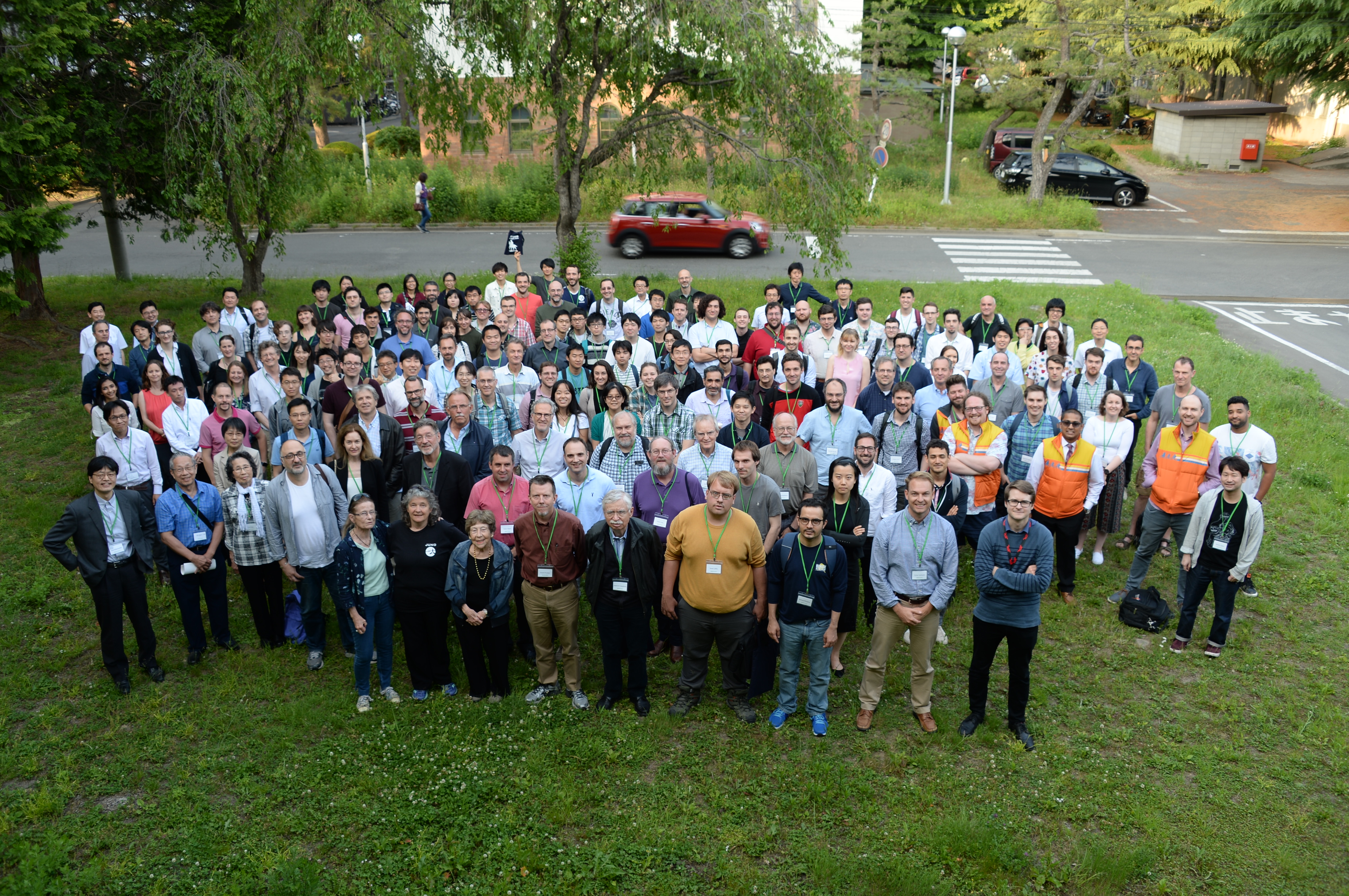
The MOP conference brings together researchers who are interested in the physical processes that control the magnetospheres of the four giant planets (and some moons!) for a week long discussion once every two years. It’s a summer-time conference and hosted at a different institution each time – this year, it was held in Sendai, Japan.
This is the second international conference that I have attended during my PhD, and there were three other PhD students from Imperial who were also attending, all of us having been awarded talks! We arrived in Sendai two nights in advance to try and beat the jet-lag (and get some exploring in) and ran into a few other MIST colleagues at the airport who had the same idea! While this does dial up the expenses a little, it also meant that I was significantly more awake during the Monday morning session than I would have been otherwise.
Sunday: Breaking the Ice
There is usually a drinks reception on Sunday evenings at MOP, since most people arrive the night before to be able to make the 9am Monday morning start. Although there was no official reception this year, we ran into others at registration and ended up hanging out anyway! We found a nice bar near campus where we marvelled about Japan and complained about our jet lag. MOP is a fairly tight-knit community seeing as it is quite small as far as conferences go (155 attended this year, 34 students), so this was a great chance to catch up with familiar faces and meet new people in a more informal setting before the conference officially began! I found that a few people had been in Japan for almost a week at this point since they had taken some time before the conference to travel around, which is something my colleagues and I were going to do after the conference instead!
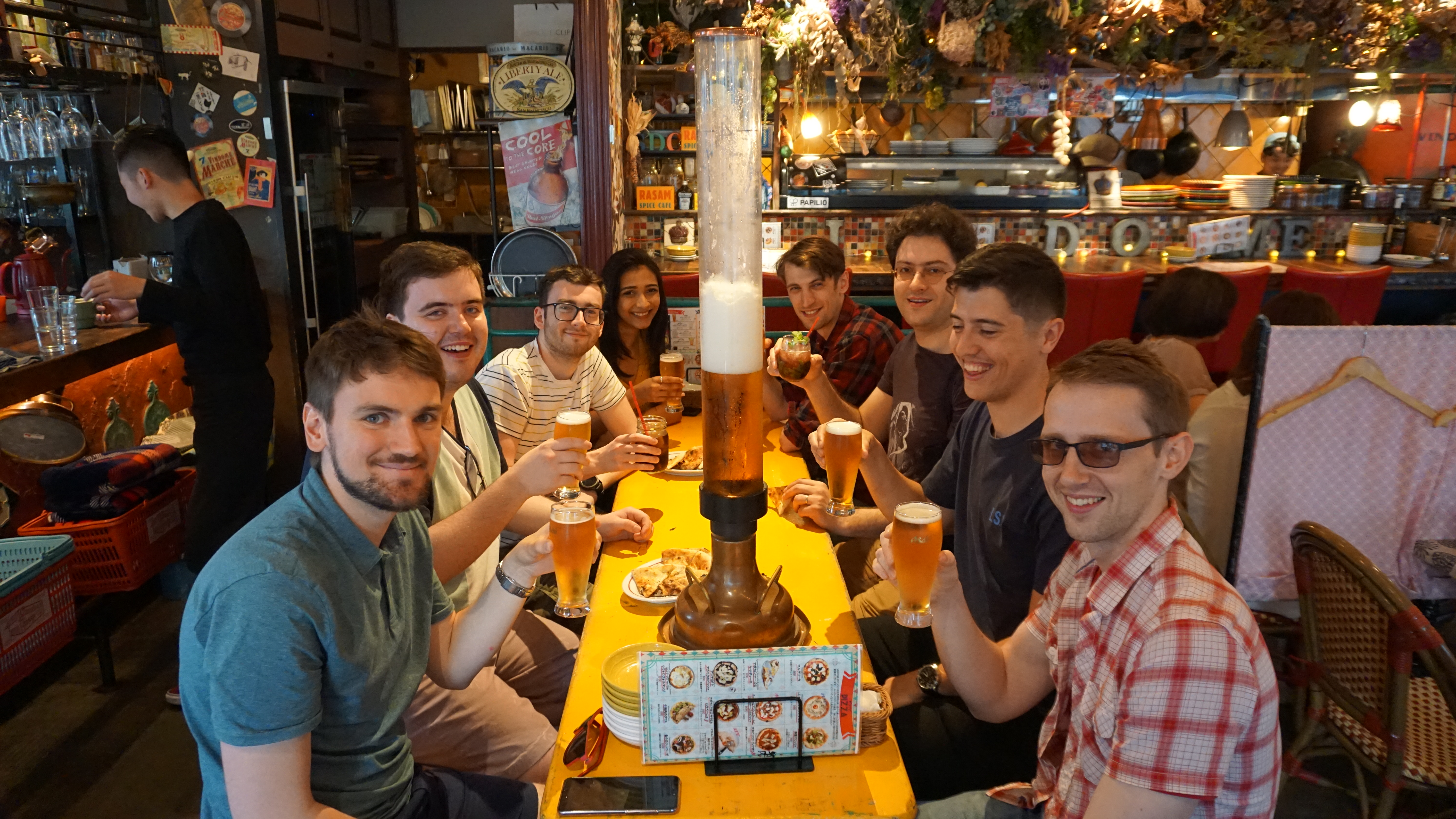
Monday: JUNO Kicks Things Off
The structure of each day was fairly similar with 4 main science sessions each day. Unlike larger conferences, there are no parallel sessions at MOP, so you don’t run the risk of clashes between sessions that you are interested in.
The science focus of the day was auroral observations from JUNO, a Jupiter-orbiter which aims to complete 32 orbits around the gas giant over one year. For many of us who aren’t directly involved in Jupiter-related science, it was our first look at data from the active mission – and it was very cool! There were a good mix of speakers, ranging from Instrument Principle Investigators to PhD students, who were all working with new data and addressing open questions, which got a lot of interesting discussions going within the group. Many of the talks in the schedule for the rest of the week were also given by PhD students (at least one or two per session!) which allowed newer members of the community to introduce themselves and present their work. This definitely made many of the sessions much more accessible for me, and made it easier to start conversations with people I hadn’t met before during coffee breaks (‘Nice talk!’ or a question about someone’s work is always a great conversation starter).
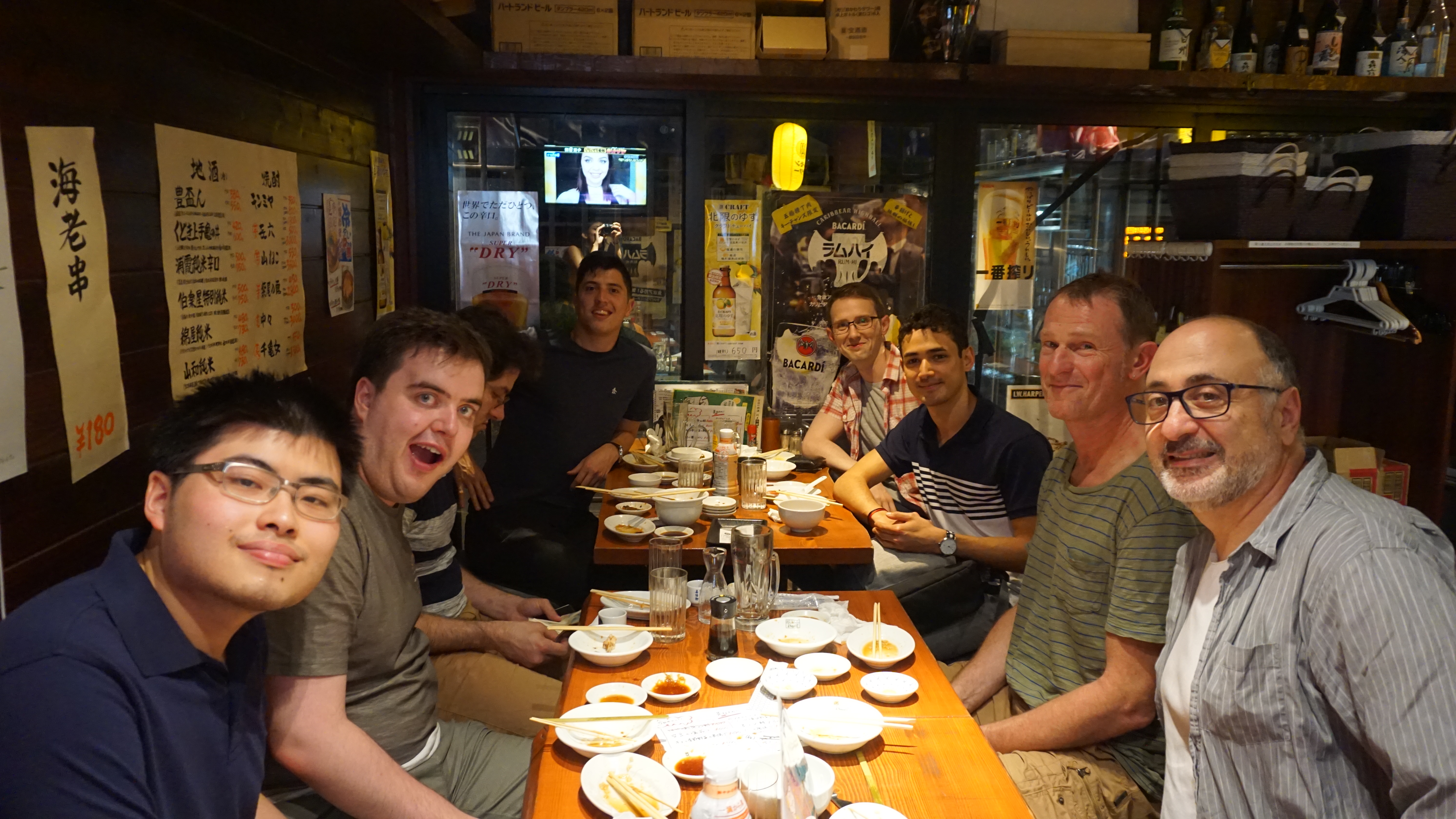
Tuesday: Time for my Talk!
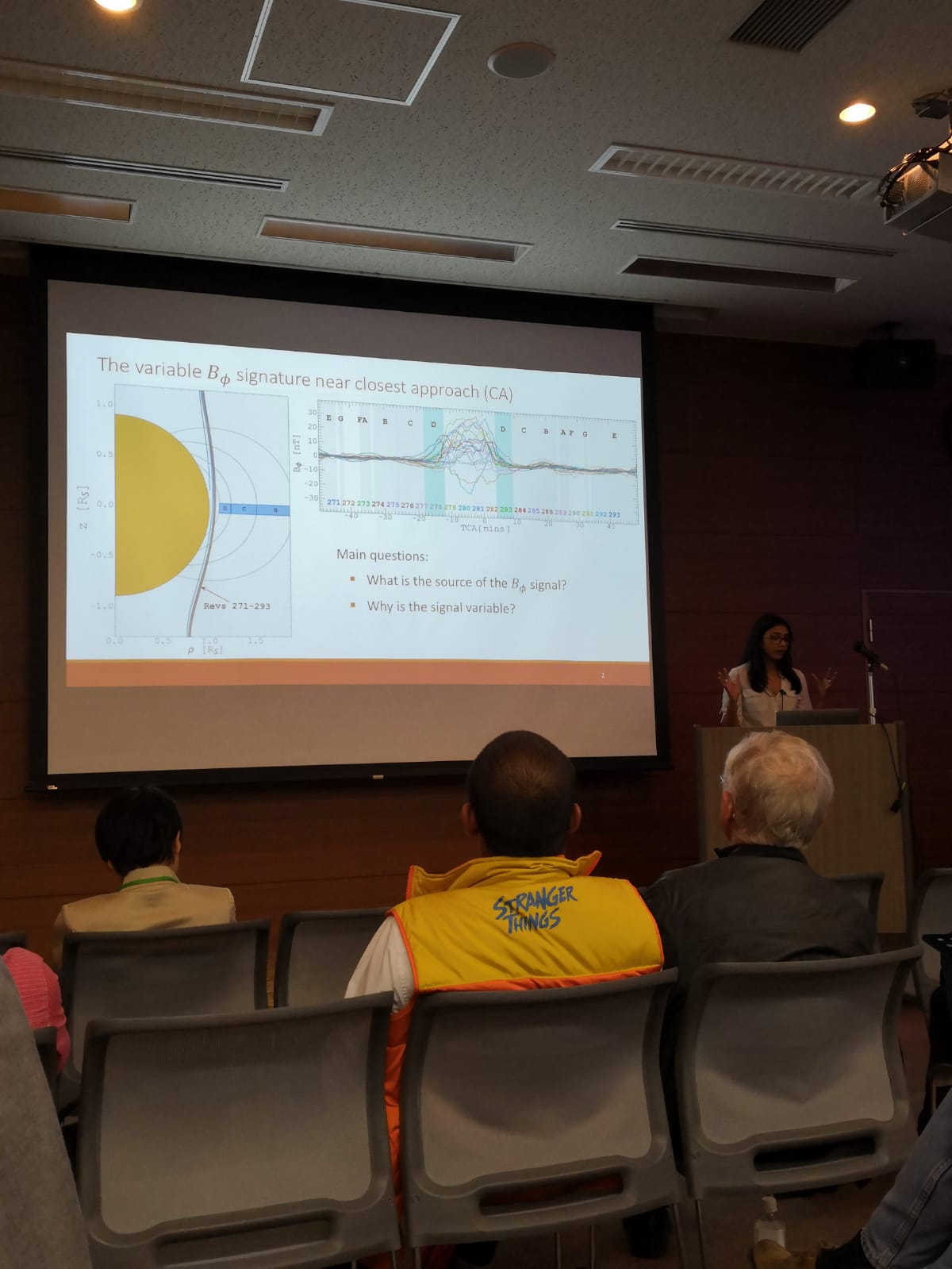
The lack of parallel sessions at MOP can seem both a blessing and a curse. Despite it being only the second day of the conference, I decided to sit-out a couple of the morning talks to go over my presentation, which was shortly after the morning coffee break. Something I picked up over the rest of the week too, was that it’s OK to skip sessions if you think you want to get some work done or need some down time. Over the rest of the week many others dropped in and out of sessions, had a lie in, or went for a walk during coffee breaks, because spending the whole day absorbing information and being surrounded by people can become very exhausting.
My talk focussed on results from the Cassini Grand Finale and a newly discovered low-latitude field-aligned current system at Saturn – and thankfully, minus a few mic-related mishaps – it went well! During the coffee break, I was asked lots of interesting questions about my work, and our discussion spilled over into part of the afternoon session, where white-board and laptops quickly became involved. This was probably my favourite part about MOP; not the skipping of the sessions, of course, but having all the experts within the field in one place. I was able to speak directly to people with whom I usually only interact via a screen, and get some really useful input on the work that I am doing which is much easier in person!
I found that coffee breaks and poster sessions were a great time to find people to ask them about their work, or to ask for their input on yours. I usually tried to avoid work-talk during lunch and generally found that other people liked to do the same.
With my talk out of the way, I was half ready to fall asleep straight after the poster session that evening – but also more willing to socialise than I had been the night before. Whilst talking with various people at the poster session, I joined some dinner plans for Shabu Shabu (a hot-pot style dish where you cook all-you-can-eat meats and veg in two types of broth and then add noodles to the broth to soak up the flavours and finish it off nicely). Since most of the other students from Imperial still had their talks to come, I ended up with a completely different group of people for dinner than Monday night, with people whose names I knew from papers but could finally put a face to!
Wednesday: More Science and More Socialising
The Science focus of the day was observations made by Hisaki, a UV astronomy satellite, in conjunction with JUNO, and magnetospheric structure and plasma physics at Jupiter and Saturn. A conference like this was a great opportunity to see the collaborations between different teams in the same room (there were also many comparisons with observations from the Hubble Space Telescope in other sessions!).
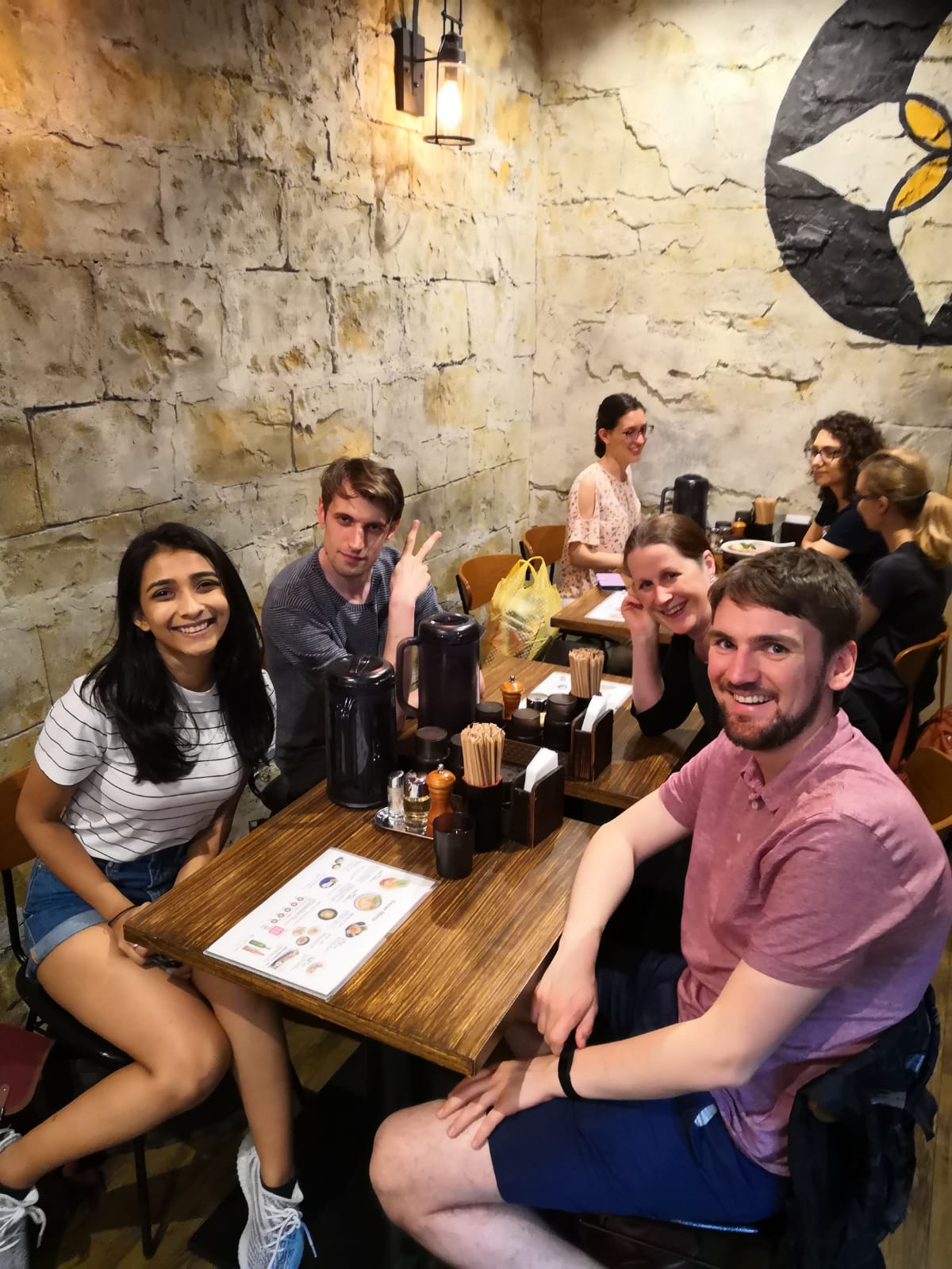
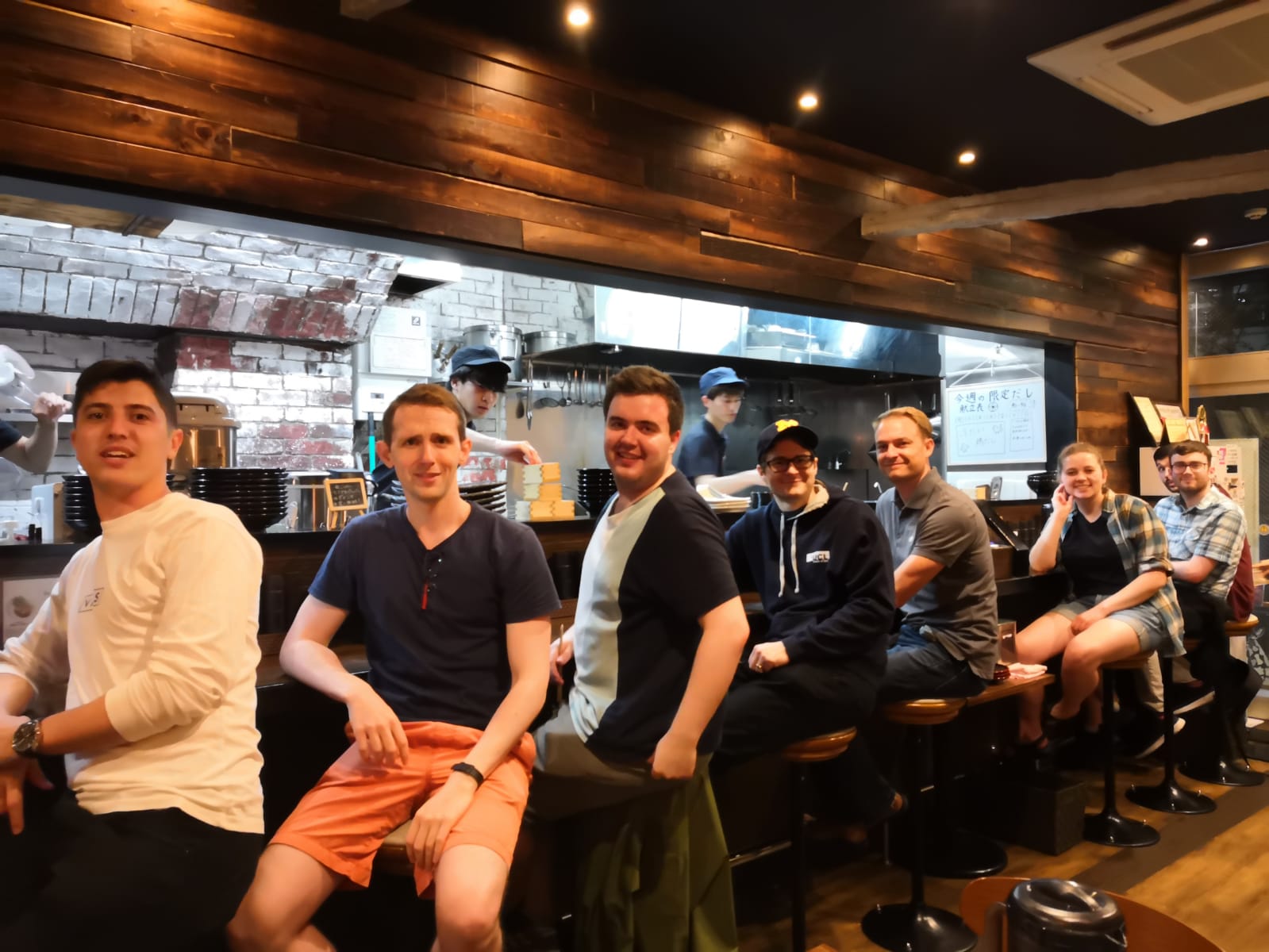
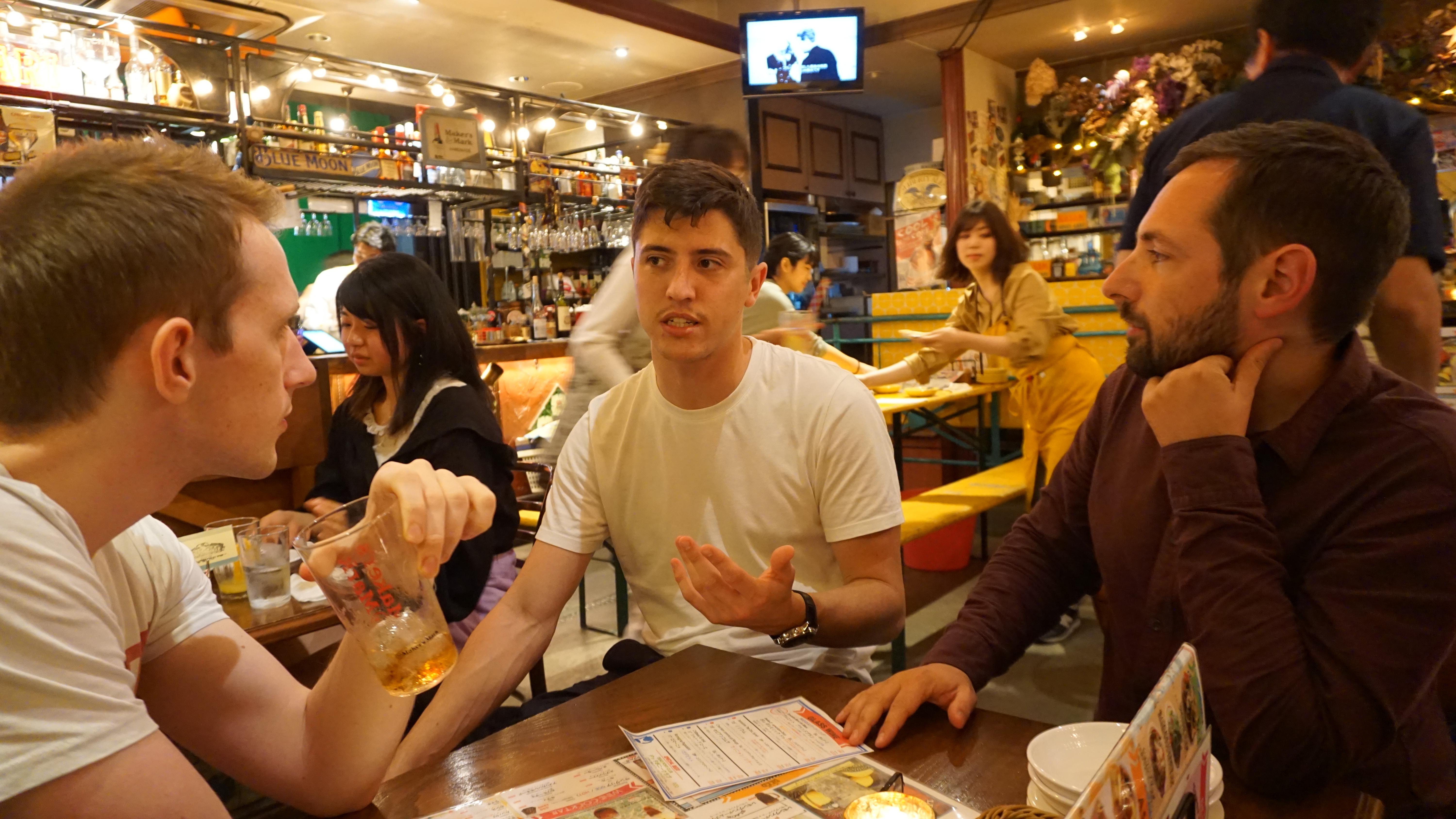
In the evening, a large group of us decided to go out for dinner together and ended up at a ramen bar where we had to order our food using buttons on a vending machine (which quickly turned into a game of mystery food orders). After dinner, some of us moved on to find some celebratory drinks, whereas others went home to try and catch up on sleep because the jet lag had led to some sleepless nights. Most of us out that night had already given our talks and I found that socialising informally was a great way to switch off my work-brain, which could sometimes be difficult when the entire day was spent in science-mode. We found a great bar that we filled out to capacity (everything in Japan is very small…) run by a single guy, who gave us free snacks, taught us a few Japanese phrases, and had us supporting the Sendai baseball team before the night was through!
Thursday: Matsushima, a Japanese Banquet, and Karaoke!
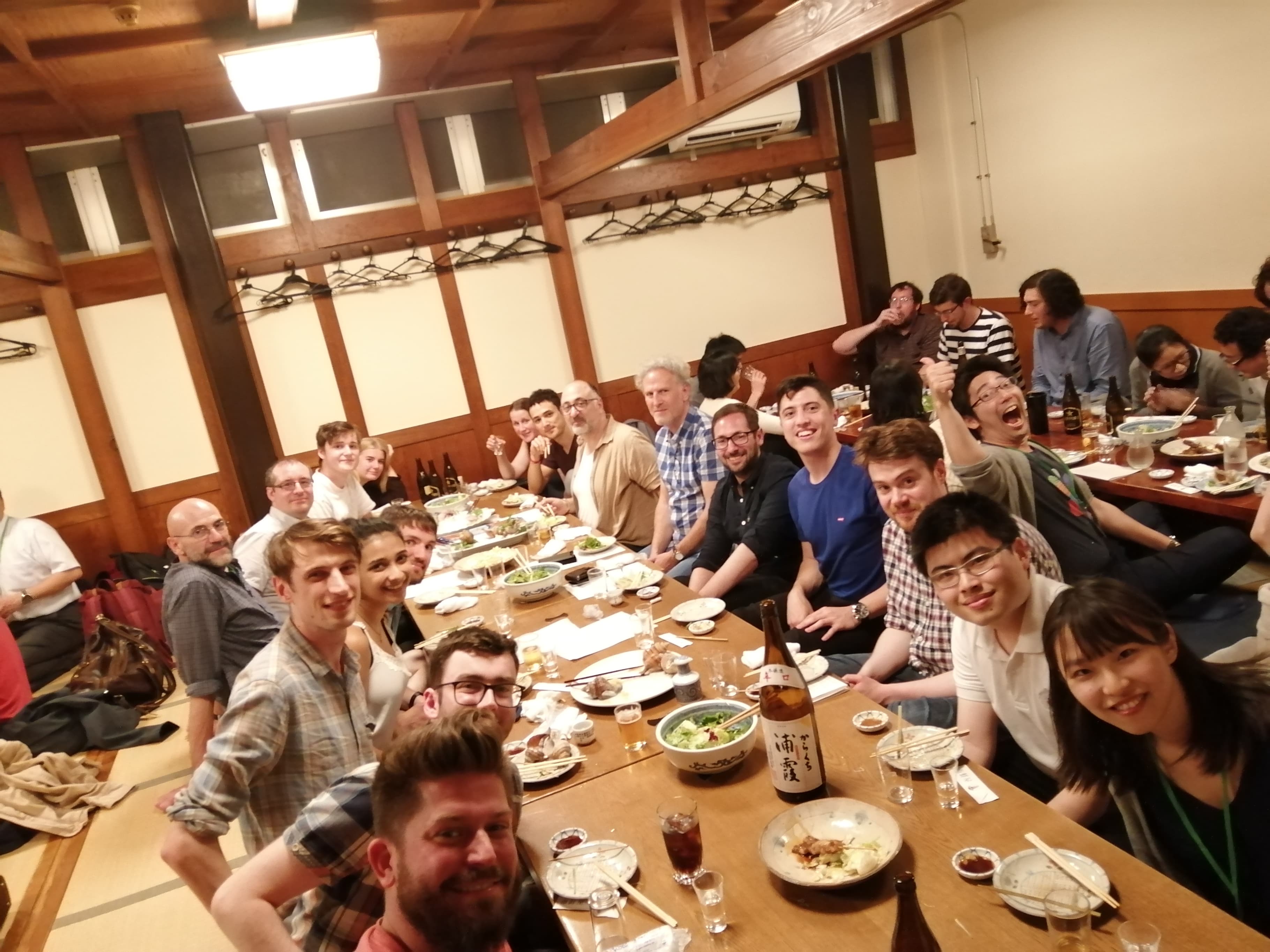
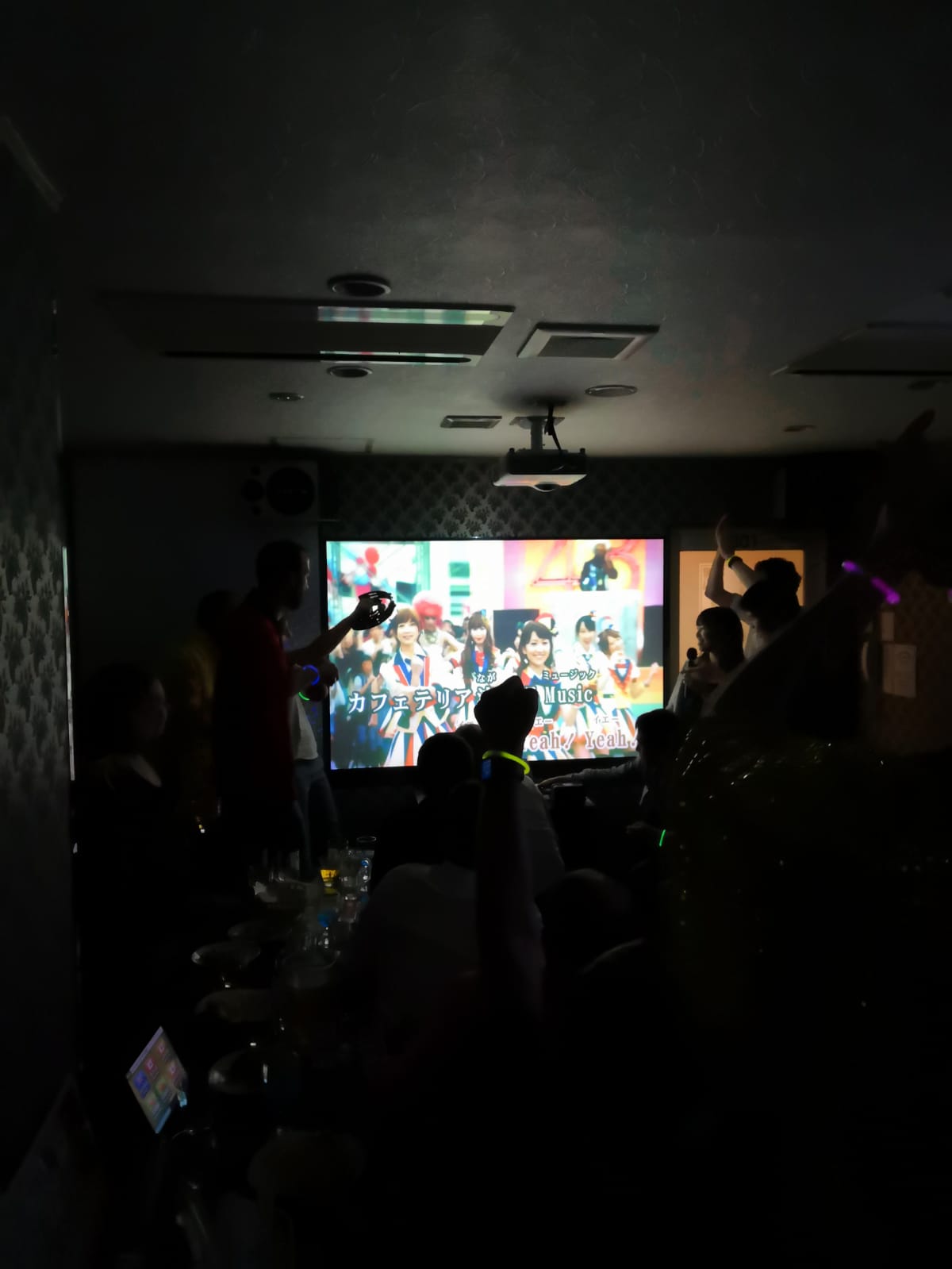
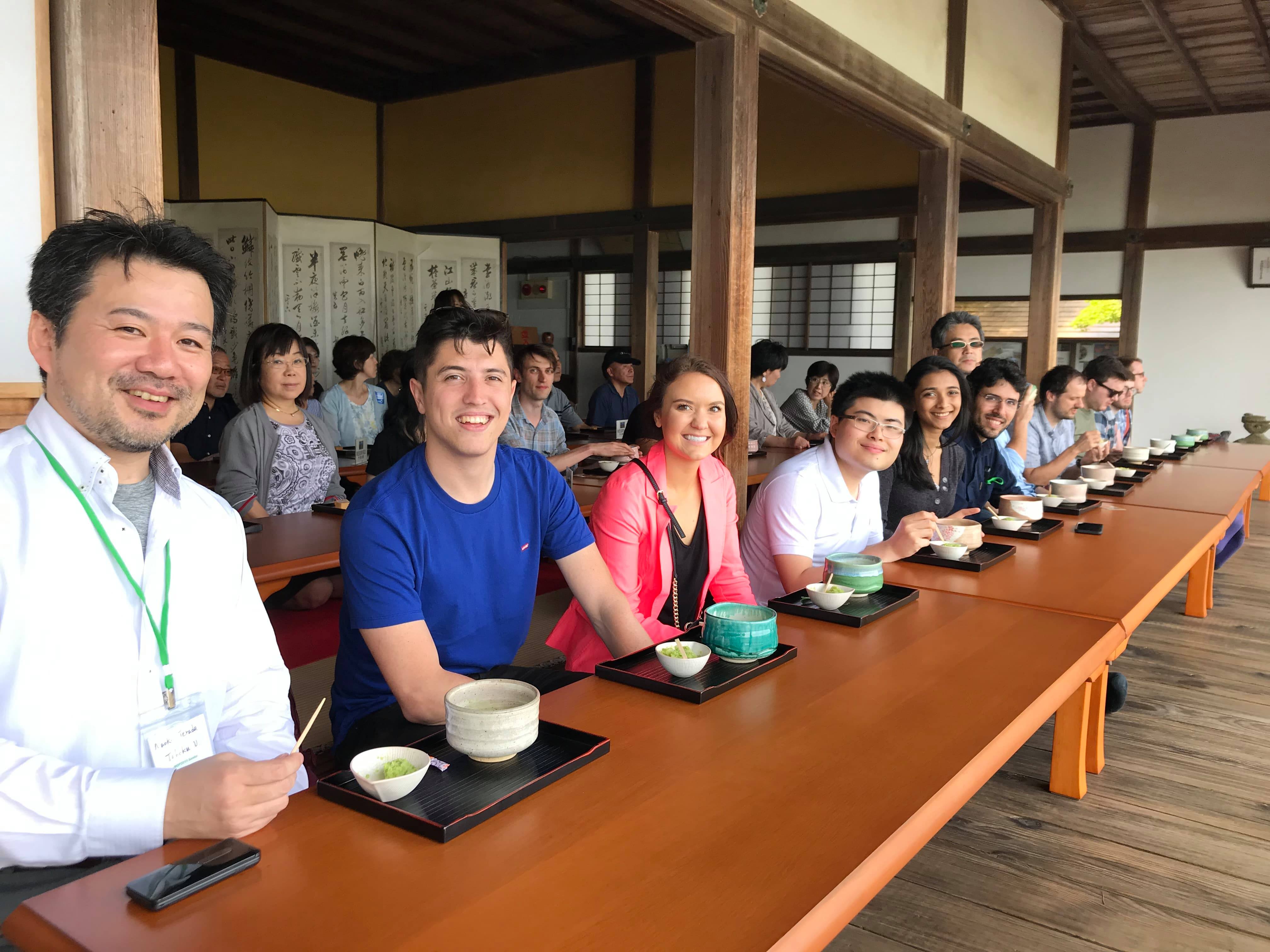
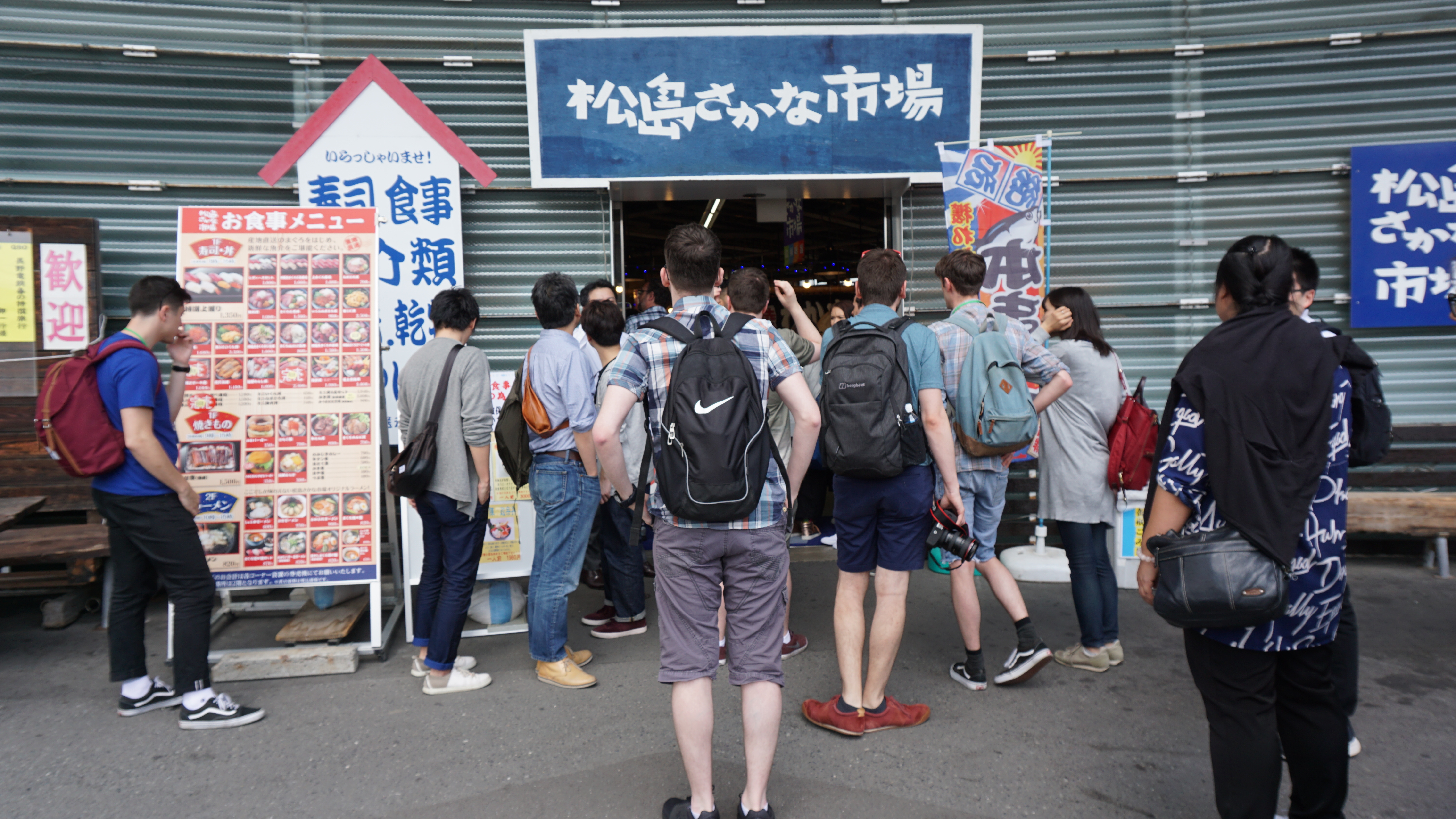
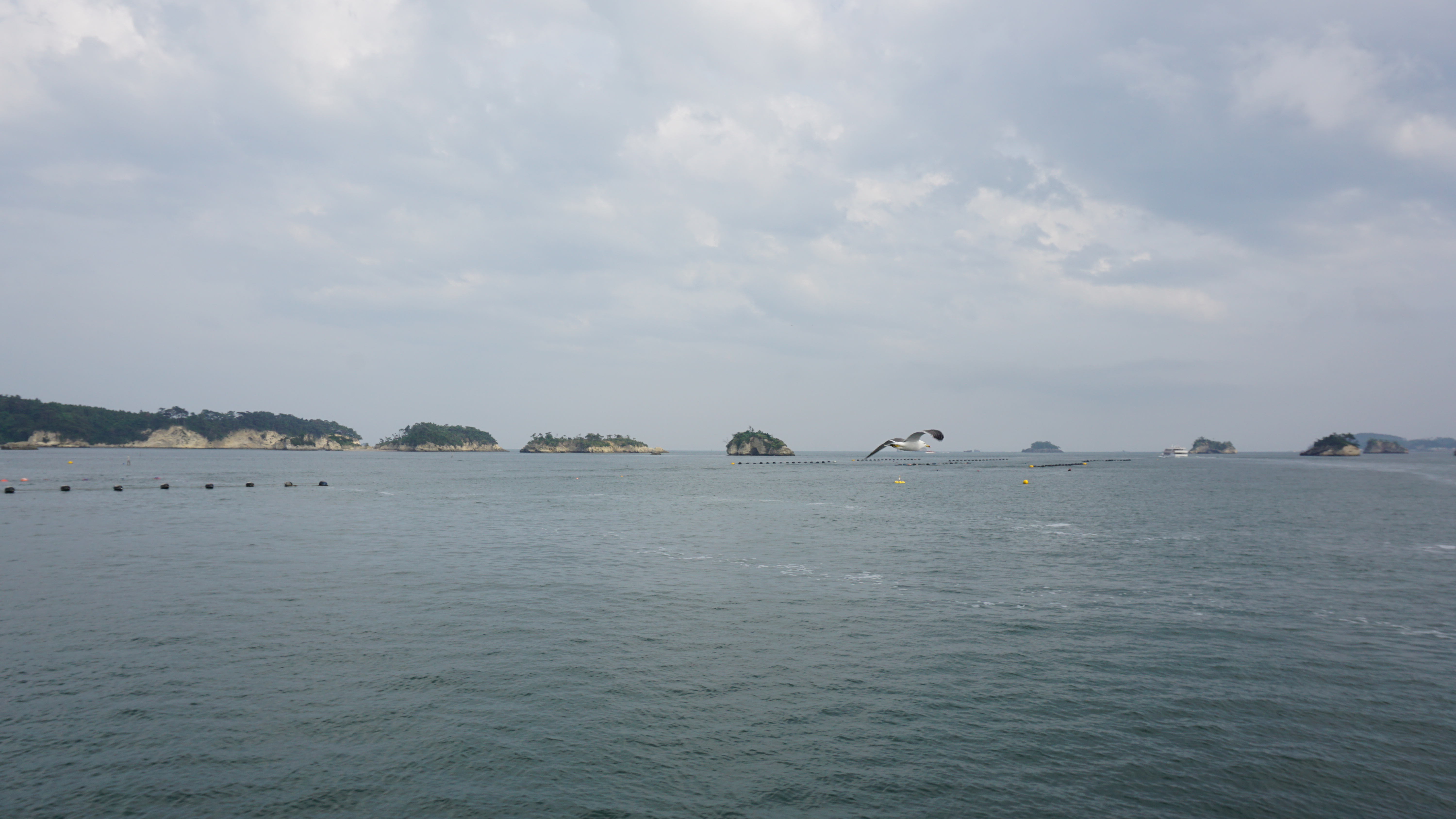
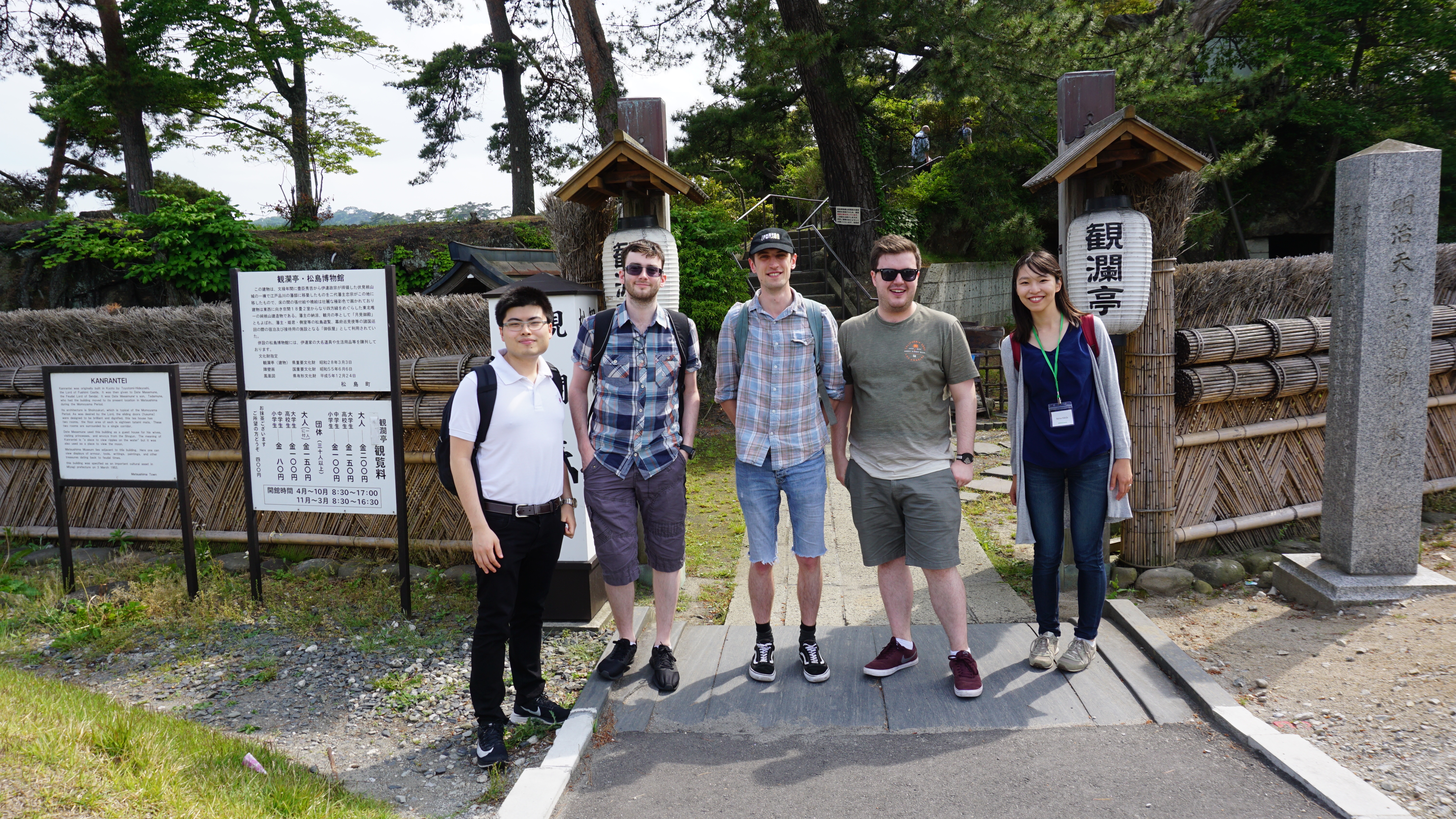
Whilst the morning focused on the moons of the outer planets, in the afternoon we had the conference excursion to Matsushima, a nearby costal city. We went for lunch; some tea and mochi with a beautiful seaside view, followed by a boat ride around the bay organised by the MOP committee in Japan, and then visited a temple. I spent my free time at the island wandering into shops and being offered free snacks by many vendors, before heading back for the conference banquet. The banquet was at a traditional sit-down style Japanese restaurant, where there was a lot of Japanese food and many more speeches. The evening then ended (or began?) with 45 people from the conference (almost a third!) doing Karaoke in a private room. We started at 10pm and I’m not quite sure when the night ended. It was an incredibly fun night, but I wouldn’t advise staying out that late any earlier in the week – lack of sleep and early mornings are never a good combination!
Friday: The Science Ends and the Holiday Begins
The final day of the conference was also a half day. The morning sessions covered magnetosphere-ionosphere coupling and general magnetospheric dynamics. Many people headed back home either that evening or the next day from Sendai, while others (me) caught up on some much needed sleep on Friday to prepare for the upcoming holidays that we had booked!
Overall, MOP 2019 was a fantastic experience, but conferences (especially international conferences with travel and jet lag thrown in) are intense! It’s easy to get both mentally and physically exhausted, and from this experience I’ve learnt how important it is to take time out when you need: either by skipping a talk for a walk outside; arriving an extra day or two before the conference; or organising a holiday afterwards to recover from all the science!
If you have any more questions about Omakshi’s experience at MOP 2019, then you can This email address is being protected from spambots. You need JavaScript enabled to view it..
Information about MOP meetings and how to subscribe to the MOP announcement mailing list can be found here: http://lasp.colorado.edu/home/mop/resources/mop-conference/